From the finance director's chair
Why your budget gets cut even when sales grow
Your sales grew 10%. Your budget still got cut. Here's what finance saw that you didn't.
I've sat on the finance side of a lot of budget meetings. When a manager says "but we grew", the conversation usually goes wrong at the same point: the manager is looking at sales, and finance is looking a few lines further down the P&L.
1. Where the growth came from
Not all sales are worth the same. Growth that comes from discounts, from one large customer who negotiates hard, or from a product with a thin margin can add plenty of revenue and very little profit. That's why finance budgets on gross profit, not on sales: gross profit is what's left after paying for what you sold.
2. What the growth cost
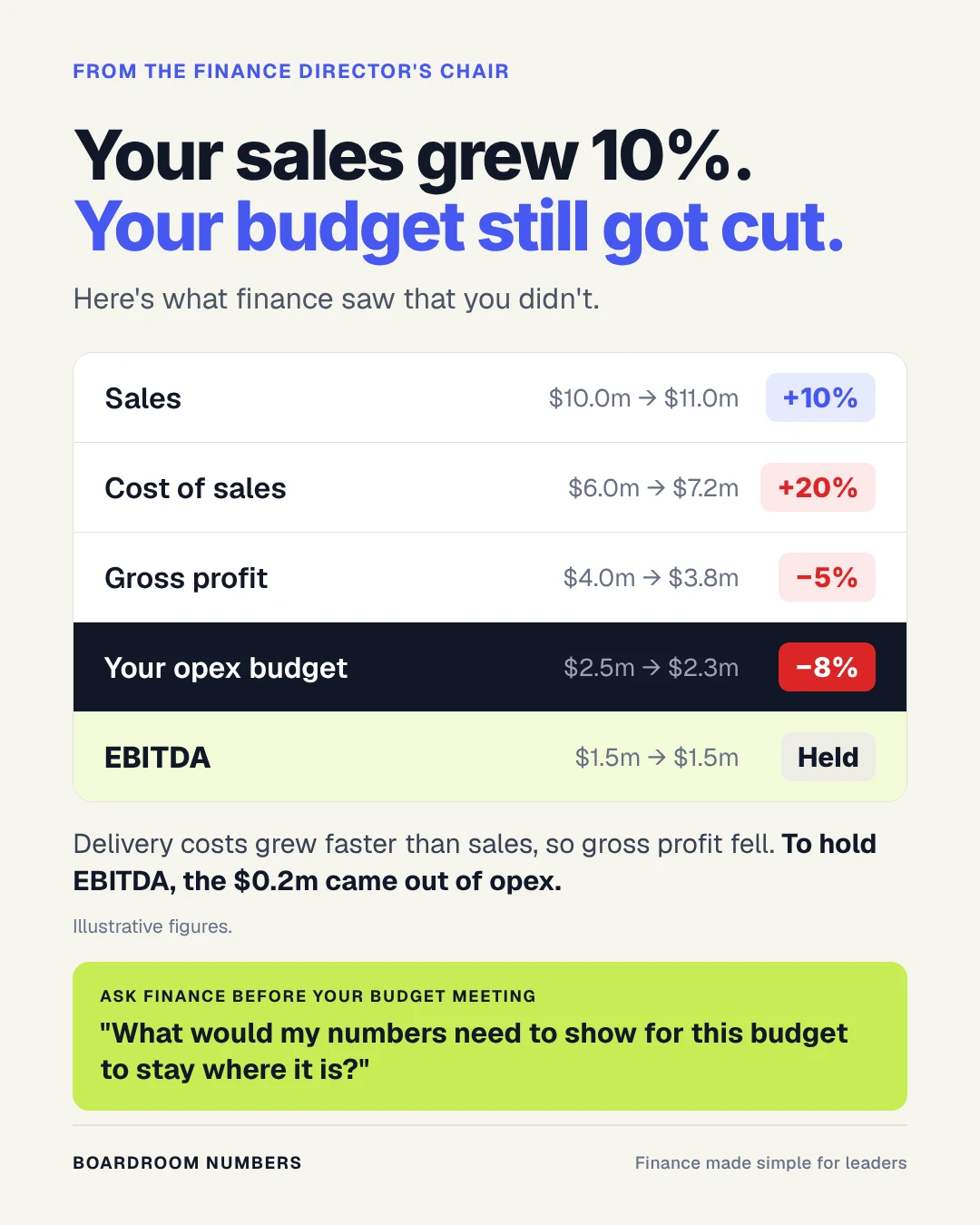
In the example above, sales grew 10% but the cost of delivering them grew 20%. Gross profit didn't rise with sales; it fell, from $4.0m to $3.8m.
Most companies have committed to an EBITDA number, roughly the profit from running the business before interest, tax and depreciation. If gross profit falls by $0.2m and EBITDA has to stay at $1.5m, the gap has to come from somewhere. Usually that's operating expenses (opex): salaries, travel, marketing, tools. In other words, your team's budget.
3. What the whole company needs
Your budget sits inside a bigger plan. If cash is tight, a bank covenant is close, or another part of the business is struggling, money gets moved, sometimes out of teams that are doing well. That isn't a judgement on your team. It's the company protecting its overall number.
What to do before your next budget meeting
- Look at your gross margin, not just your sales. If margin fell while sales grew, expect questions.
- Know which of your costs grew faster than your sales, and why.
- Ask finance what the company is protecting this year: EBITDA, cash or something else.
"What would my numbers need to show for this budget to stay where it is?"
You'll walk in knowing exactly what you need to argue for.